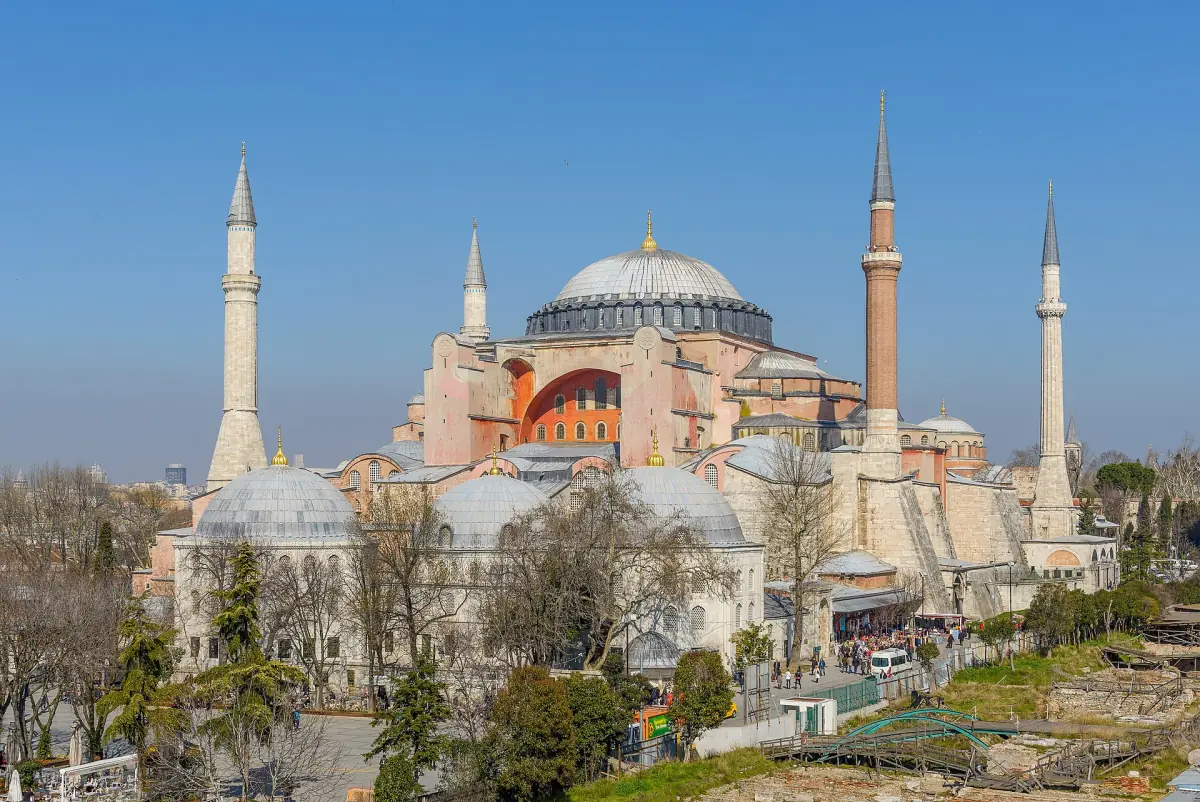
Hagia Sophia dress code in short
The Hagia Sophia is a working mosque. Visitors who are not praying use a separate visitor area with a ticket, and the same rules of dress apply there. Plan clothes that cover shoulders and knees, and women bring a scarf for the head.
The details below describe what independent visitor guides report for 2026. Staff at the entrance decide on the day, so treat this page as preparation and follow what you are told at the door. This is an independent guide and not the mosque administration.
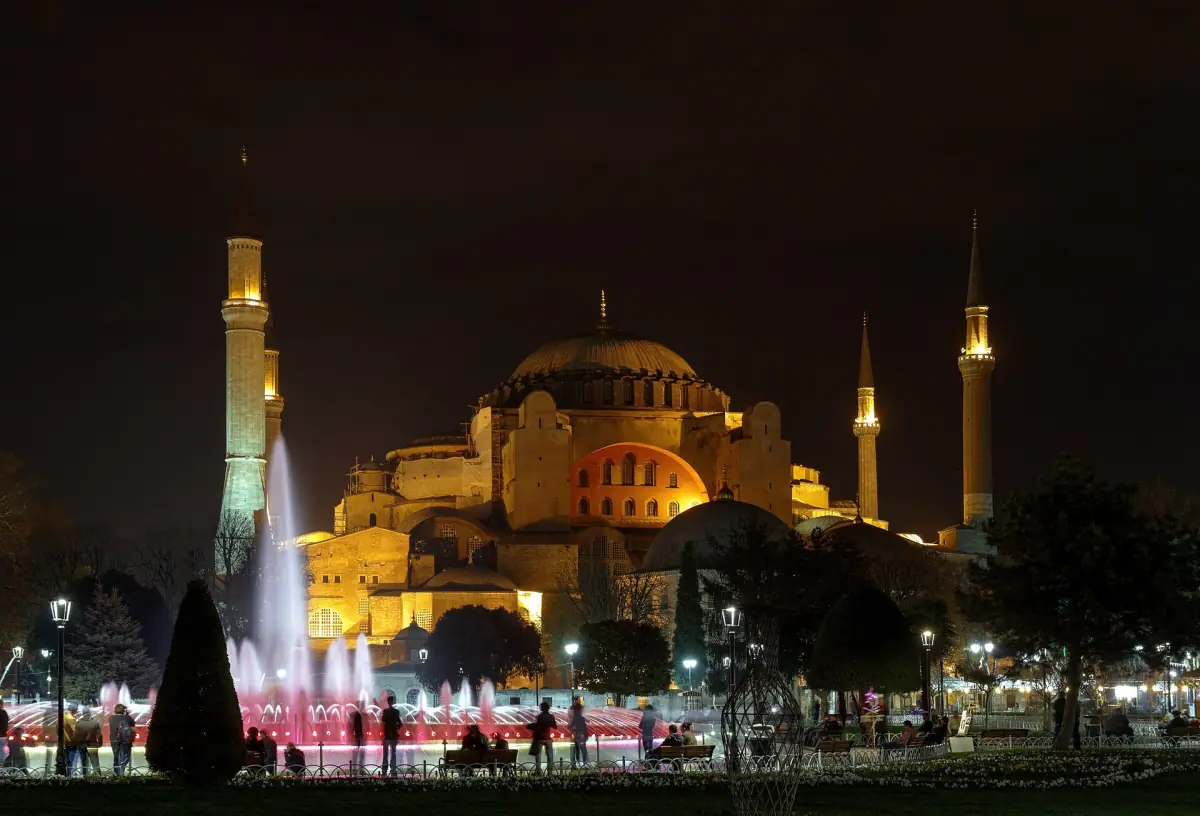
What to wear, at a glance
The same basic idea for everyone: modest, covering and easy to move in.
| Item | Women | Men |
|---|---|---|
| Head | Cover the head with a scarf | – |
| Shoulders | Covered, no sleeveless tops | Covered, no sleeveless tops |
| Legs | Long trousers, a long skirt or a long dress that covers the knees | Long trousers |
| Fabric | Nothing transparent | Nothing transparent |
| Shoes | Off in the carpeted prayer areas | Off in the carpeted prayer areas |
Shorts, short skirts, tank tops and sheer fabrics do not meet the rules. A light long-sleeved shirt and loose long trousers cover most of this in any season.
Tickets and guided visits for the Hagia Sophia
Entry tickets, guided walks and combinations with other sights in the old city, with live prices and availability. Check what each offer includes before you book.
Rules inside the building
Small habits that matter in a place of worship.
Headscarf
Bring your own scarf and put it on before you reach the entrance. A large, light scarf also works over the shoulders if you wear a short-sleeved top. Do not plan on buying or borrowing one at the entrance.
Shoes
Shoes come off in the carpeted prayer areas. Wear shoes that are easy to slip off and on, and carry a small bag for them if you are told to.
Photos
Do not photograph people who are praying. Photograph the architecture and mosaics, keep your phone low and give worshippers space.
Strollers
Strollers must be folded and carried in the visitor area. A baby carrier is easier than a stroller for the visit.
Voice and manner
Keep your voice low and follow signs and staff. Prayer takes priority over sightseeing.
Mosque rules and prayer →What to wear by season
Mean daily temperatures and rainfall in Istanbul, 1950 to 2025, from the Turkish State Meteorological Service.
| Month | Mean high | Mean low | Rain | Clothing idea |
|---|---|---|---|---|
| January | 9.6 °C | 4.2 °C | 88.8 mm | Coat, scarf, rain jacket |
| April | 17.4 °C | 9.2 °C | 47.8 mm | Layers, light jacket |
| May | 22.3 °C | 13.6 °C | 32.9 mm | Long sleeves, thin layer |
| July | 29.7 °C | 20.5 °C | 22.1 mm | Light linen, long and loose |
| September | 25.9 °C | 17.6 °C | 39.7 mm | Thin long layers |
| October | 20.6 °C | 13.7 °C | 66.3 mm | Light jacket, umbrella |
| December | 11.8 °C | 6.5 °C | 99.2 mm | Warm layers, waterproof |
These are monthly averages for the city, not a forecast for your day. In summer, long and loose clothes in cotton or linen keep you cooler than you might expect. In the wetter months, a rain jacket that covers the shoulders does double duty.
Plan the rest of your visit
Tickets, hours and what you will see.
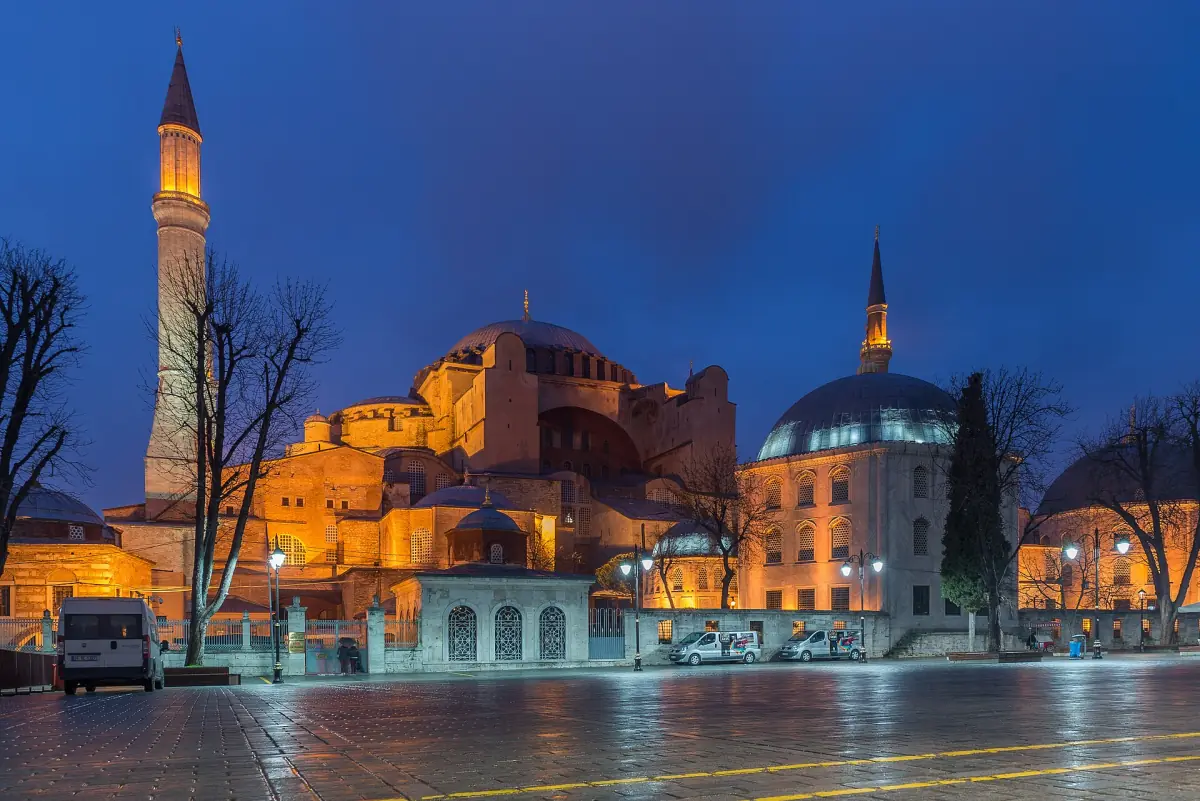
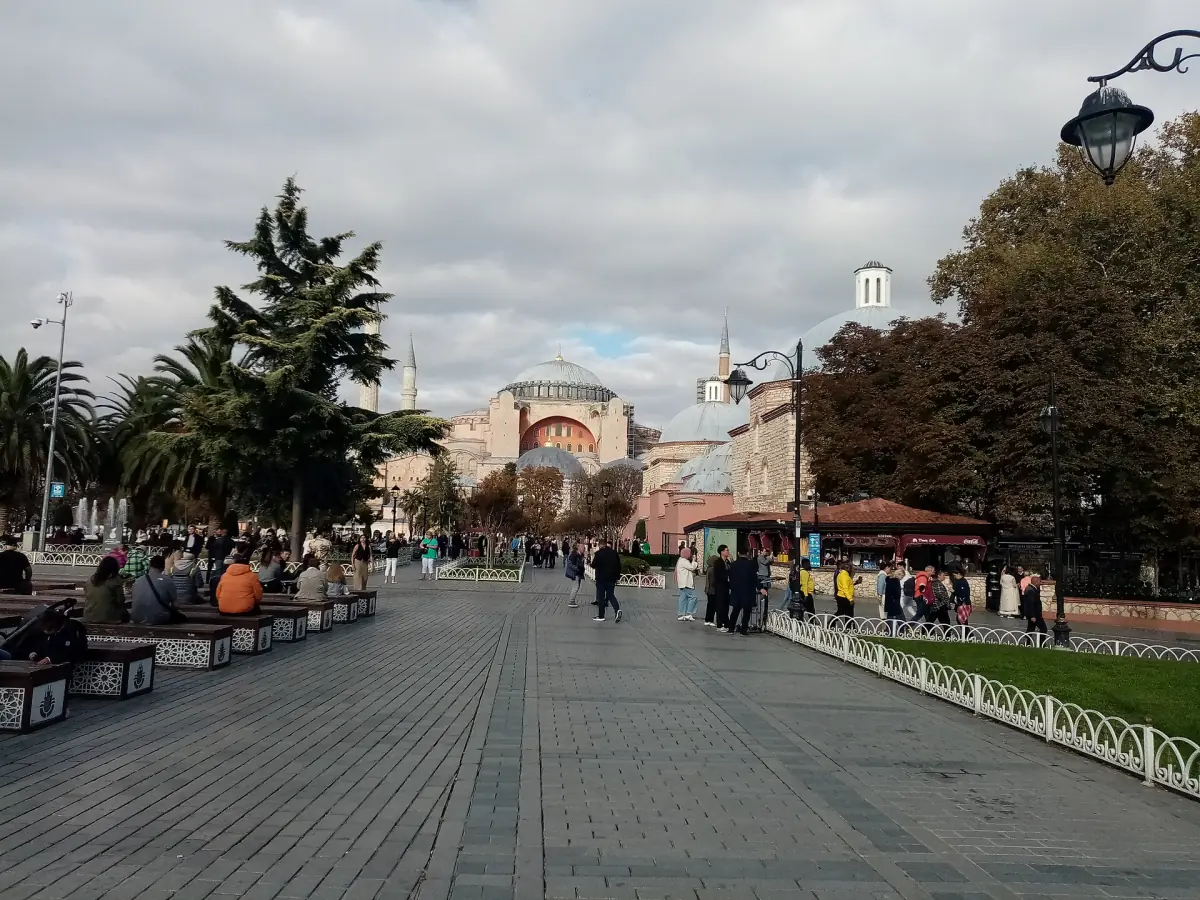
Hagia Sophia dress code: frequently asked questions
Do women have to cover their hair?
Yes. Women should cover the head with a scarf. Bring your own so you are not dependent on anything at the entrance.
Can I wear shorts?
No. Shoulders and knees must be covered, so men wear long trousers and women wear long trousers, a long skirt or a long dress. Sleeveless and transparent clothing is also out.
Do I take my shoes off?
Shoes come off in the carpeted prayer areas. Wear shoes that are quick to remove and put back on.
Can I take photos?
Photos of the building and the mosaics are fine. Do not photograph people who are praying.
Are strollers allowed?
In the visitor area strollers must be folded and carried. A carrier is more practical for small children. Children under 8 enter free with proof of age at the turnstile.
Does the dress code differ for tourists and worshippers?
The rules of dress are the same for everyone entering a mosque. Visitors who come for a visit use the separate visitor area. Check the current arrangement before you go, because staff and signs on the day apply.