What you see inside the Hagia Sophia
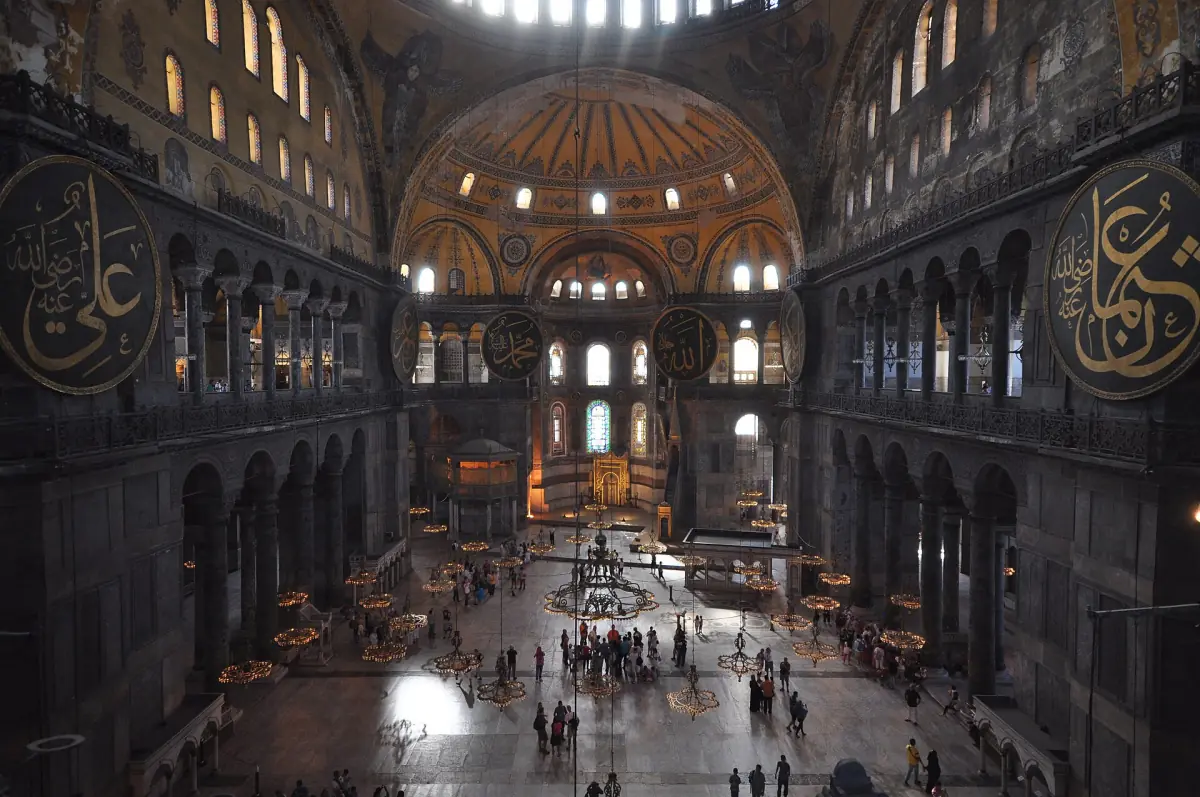
The Hagia Sophia is a mosque, and the visitor route is kept apart from the prayer area. When the ticketed route began on 15 January 2024, it was described as an entry from the Topkapı side that leads to the upper gallery, which was made accessible again for visitors. Most of what you come to see sits on that level: mosaics, gallery arches and views down into the hall.
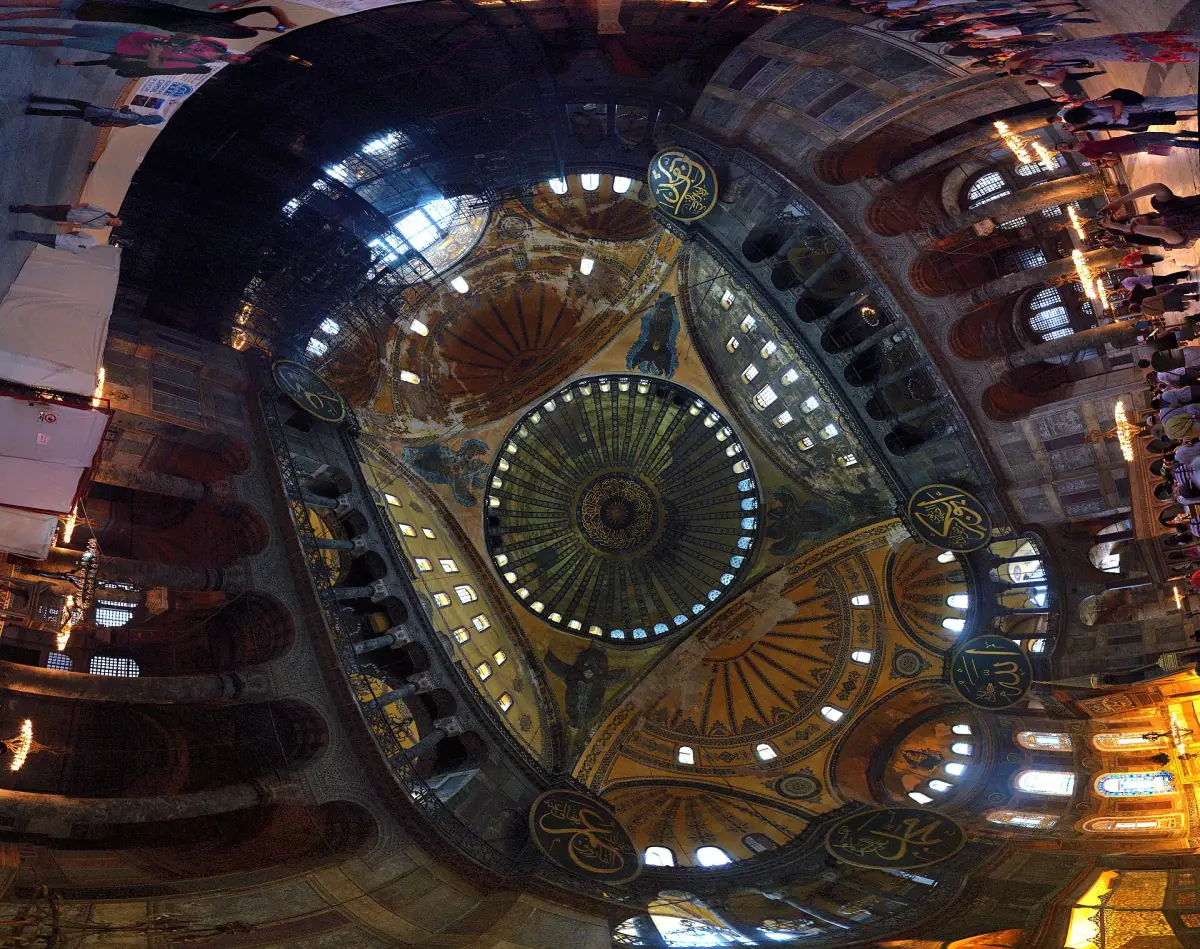
Do not plan on a clear view of every part of the building. Restoration work on the dome and the eastern half-dome was documented in September 2026, with a protective structure and a steel platform. Expect scaffolding in some views, and expect that some mosaics are hard to see on a given day. This is an independent guide, so check the situation on the day.
The main mosaics, compared
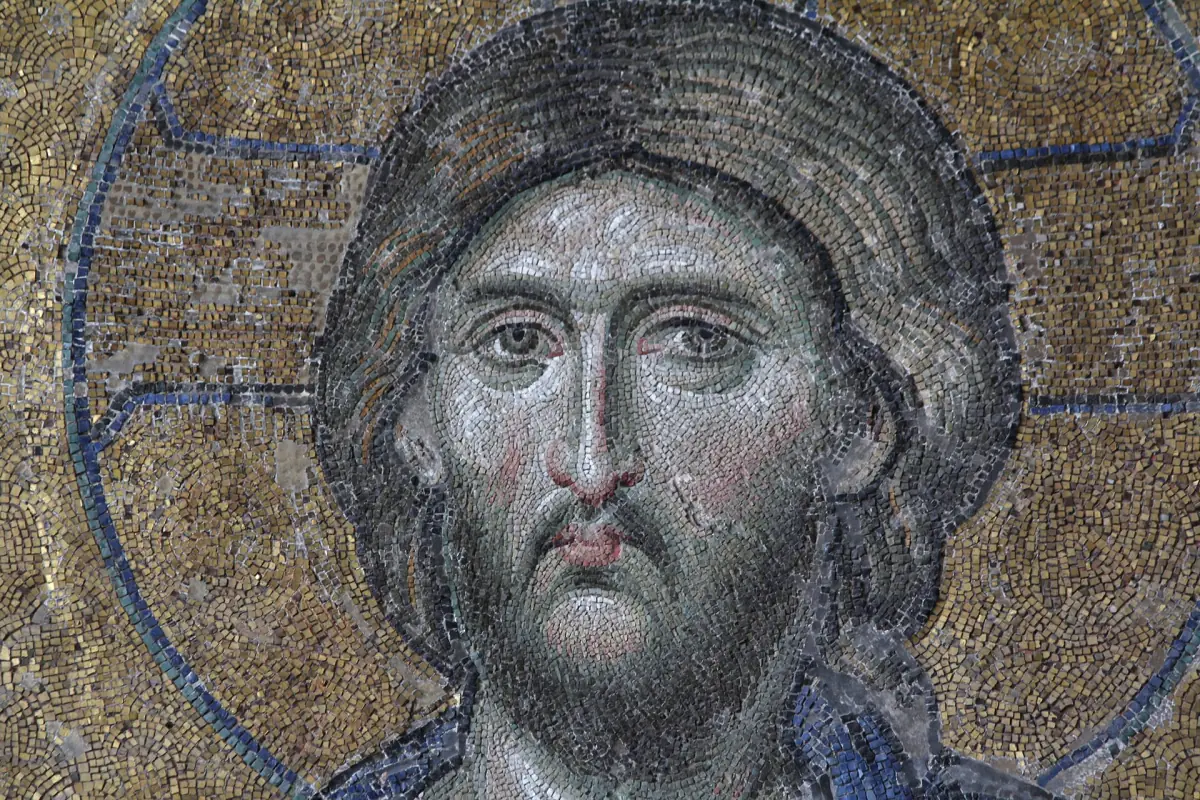
Mosaics in the gallery come from different centuries.
| Mosaic | Shows | Date | Where |
|---|---|---|---|
| Deësis | Christ between Mary and John the Baptist | Usually dated to about 1261 | West wall of the south gallery |
| Zoe mosaic | Christ with Constantine IX and Zoe | 11th century, with later changes | Upper gallery |
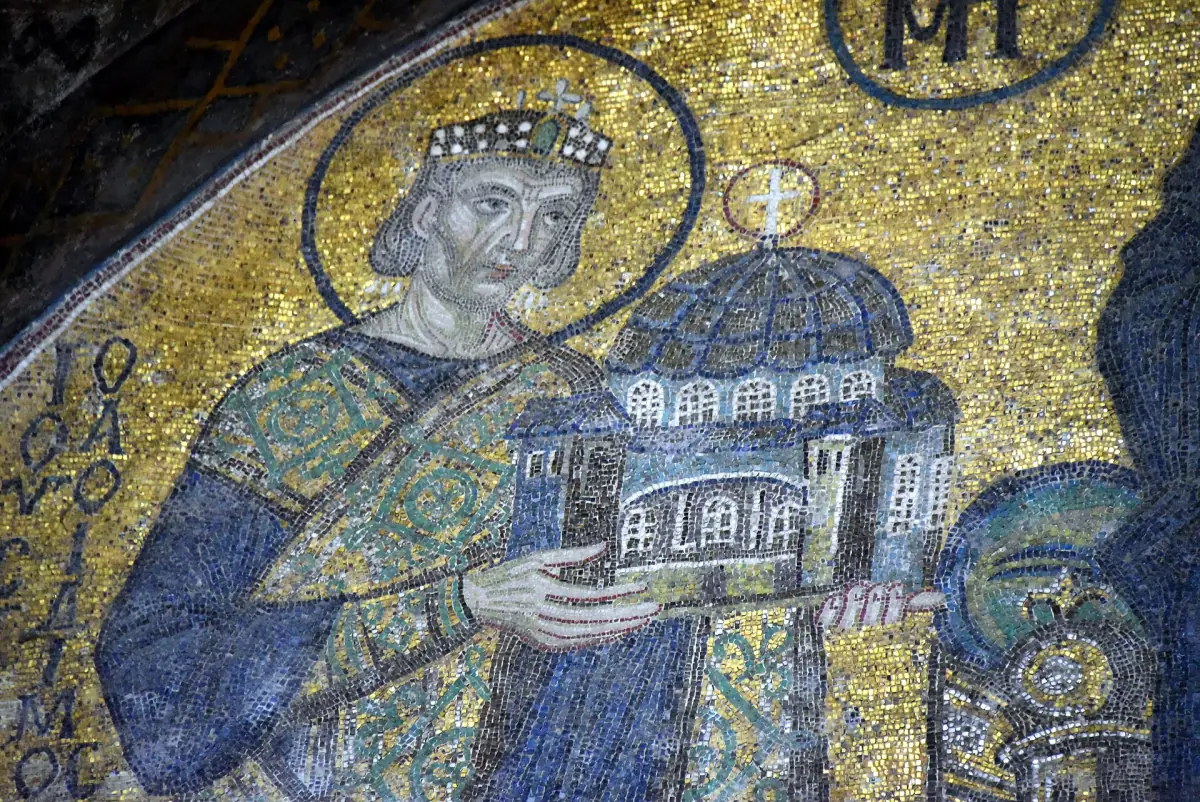
| Komnenos mosaic | Mary with the child, John II Komnenos and Irene | 12th century | Upper gallery |
Not all of the figural mosaics date from the original construction. The decoration in the building comes from several periods, and the Deësis date is a scholarly attribution, not a recorded day.
Guided visits inside the Hagia Sophia
Guided walks, audio options and tickets for the visitor area, with live prices and availability. Check whether the entry ticket is included in each offer.
Highlights to look for
In the order a gallery walk usually brings them.
The Deësis
On the west wall of the south gallery, Christ appears between Mary and John the Baptist. It is the mosaic most visitors come for. Allow time to stand back and look at the three figures.
The Zoe mosaic
Christ with the emperor Constantine IX and the empress Zoe, from the 11th century. Changes were made to the mosaic over time, which is part of its interest.
Mary with the child and the Komnenos family
A 12th-century panel with Mary, the child, John II Komnenos and Irene. Like the Zoe panel, it places imperial figures beside sacred ones.
The gallery arches
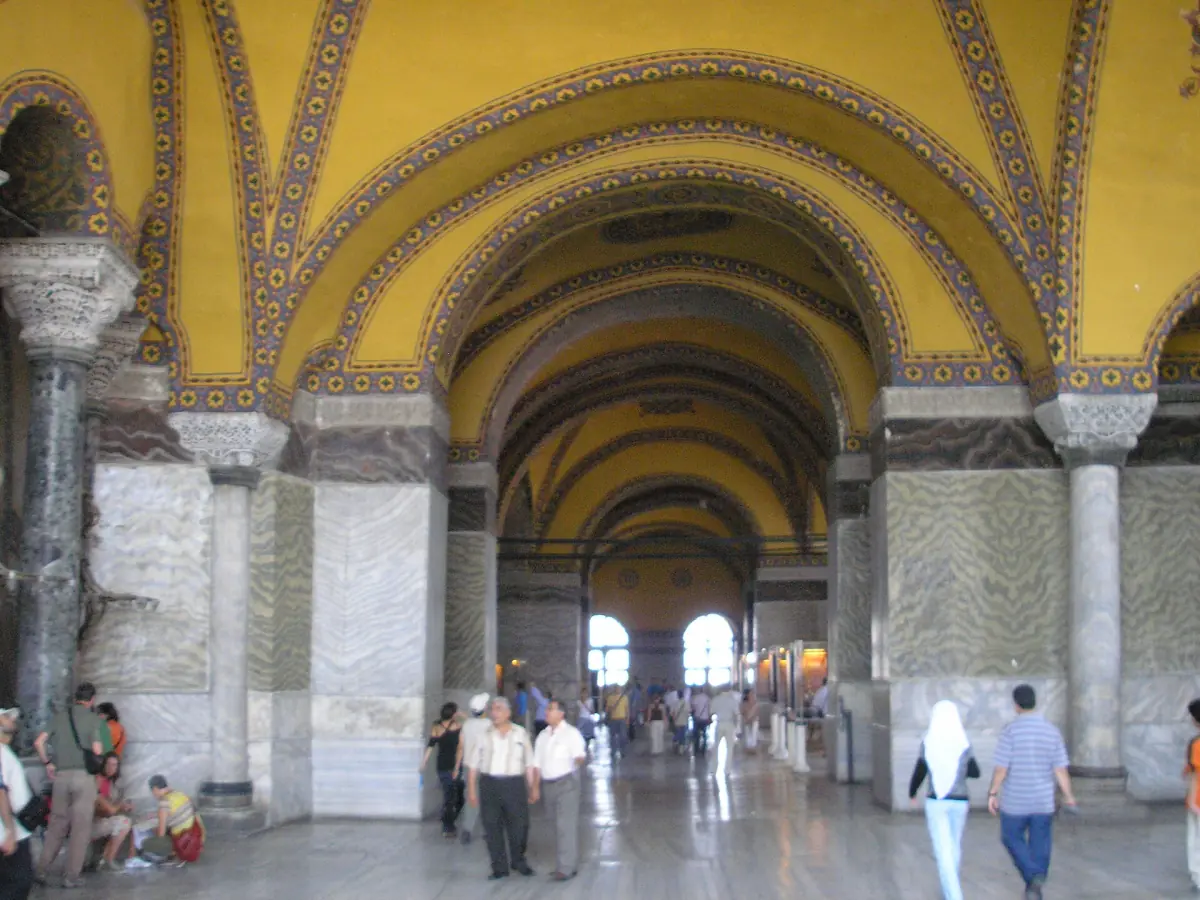
The upper gallery has columns and painted vaults, and its arches open onto the nave. It is a good place for a view of the hall, within what the restoration allows on the day.
The empress's lodge
An independent report describes the empress's lodge as an area visible from the gallery that visitors cannot enter. Look, but do not expect access.
Layers of the building
Marble cladding, figural mosaics in the gallery and narthex, and Ottoman fittings such as the mihrab and minbar belong to different periods. A visit shows the building as a sequence of changes. The mosaics were made while it was a church; the mihrab and minbar were added later for use as a mosque.
The same walls therefore carry Byzantine imagery and Ottoman additions. The history page explains how the building passed from one use to the next, and the architecture page covers the structure.
Photography rules and etiquette are in the dress code guide. Do not photograph people who are praying.
Make the most of the visit
Practical points for a gallery walk.
Go early or late
Check the current timetable for your date. Friday has a break around midday prayer.
Opening hours →Know what is not included
The gallery ticket is not part of the Istanbul museum pass. The separate History and Experience Museum is in another building.
The museum →Add a guide
A guide can explain the mosaics, but a guide does not give access to closed rooms.
Tours compared →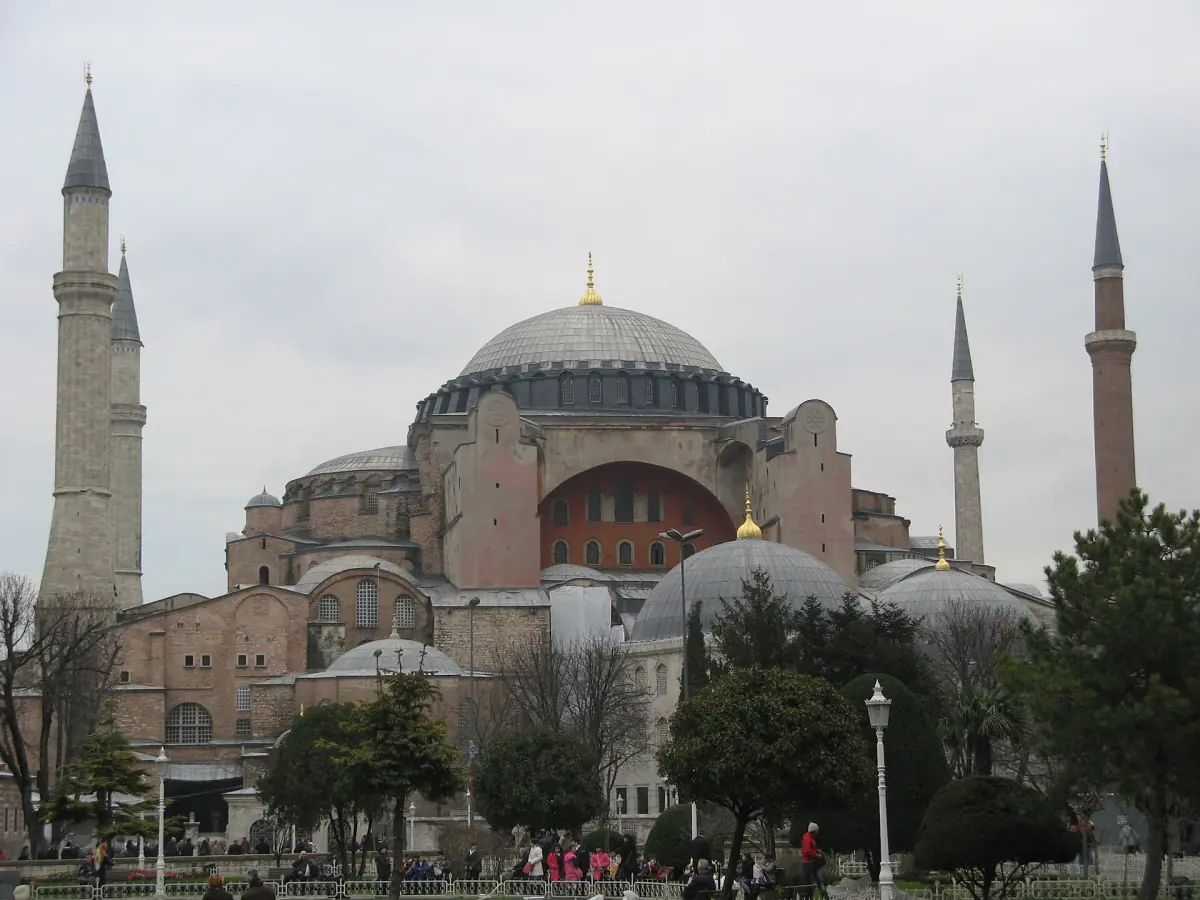
Inside Hagia Sophia: frequently asked questions
Can I go into the main prayer hall?
Visitors use a separate route that includes the upper gallery. Do not plan on entry to the ground floor as a tourist.
Where is the Deësis mosaic?
On the west wall of the south gallery. It shows Christ between Mary and John the Baptist and is usually dated to about 1261.
Will I see the dome clearly?
Not necessarily. Restoration of the dome and the eastern half-dome was documented in September 2026, with a protective structure and a steel platform. Views may be partly blocked.
Are all the mosaics original to the 6th century?
No. The gallery mosaics come from several periods, including the 11th and 12th centuries, and some were changed over time.
Can I enter the empress's lodge?
It can be seen from the gallery, but it is not open to visitors.
Is the gallery in the Istanbul museum pass?
No. The gallery has its own ticket at €25 in 2026.