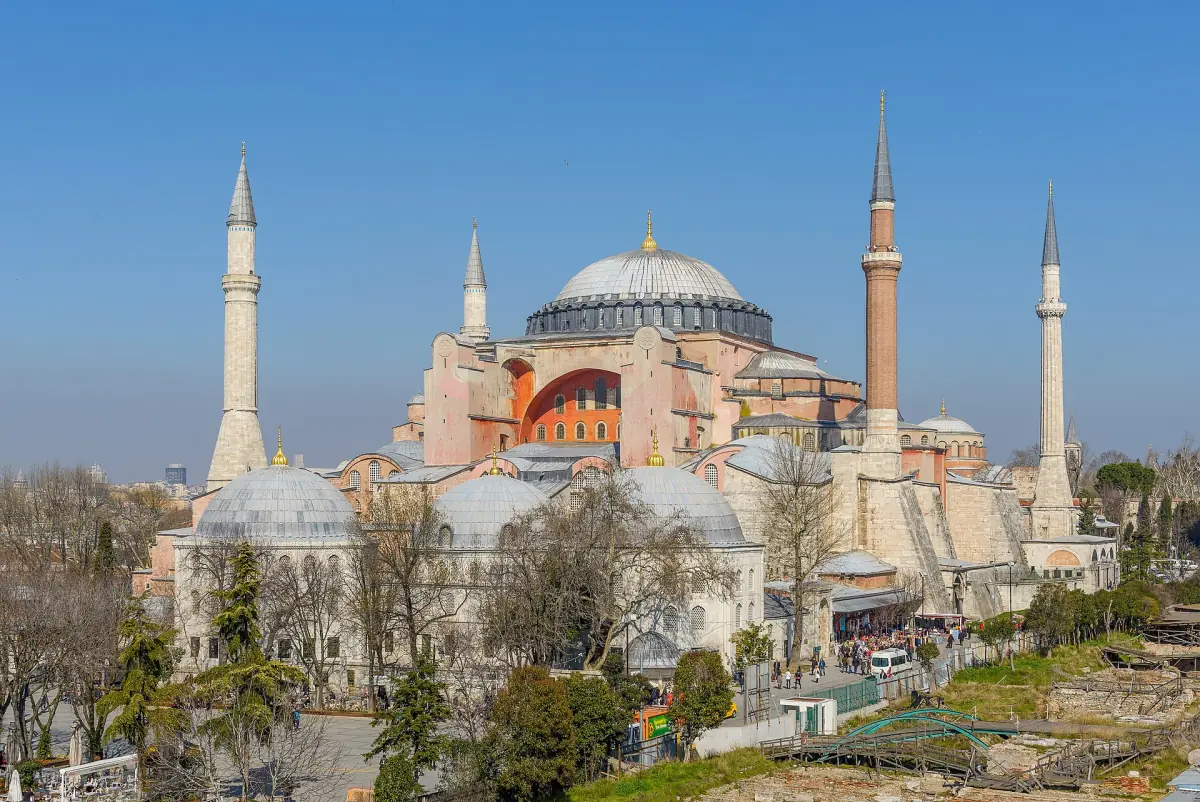
Hagia Sophia as a mosque: what it means for your visit
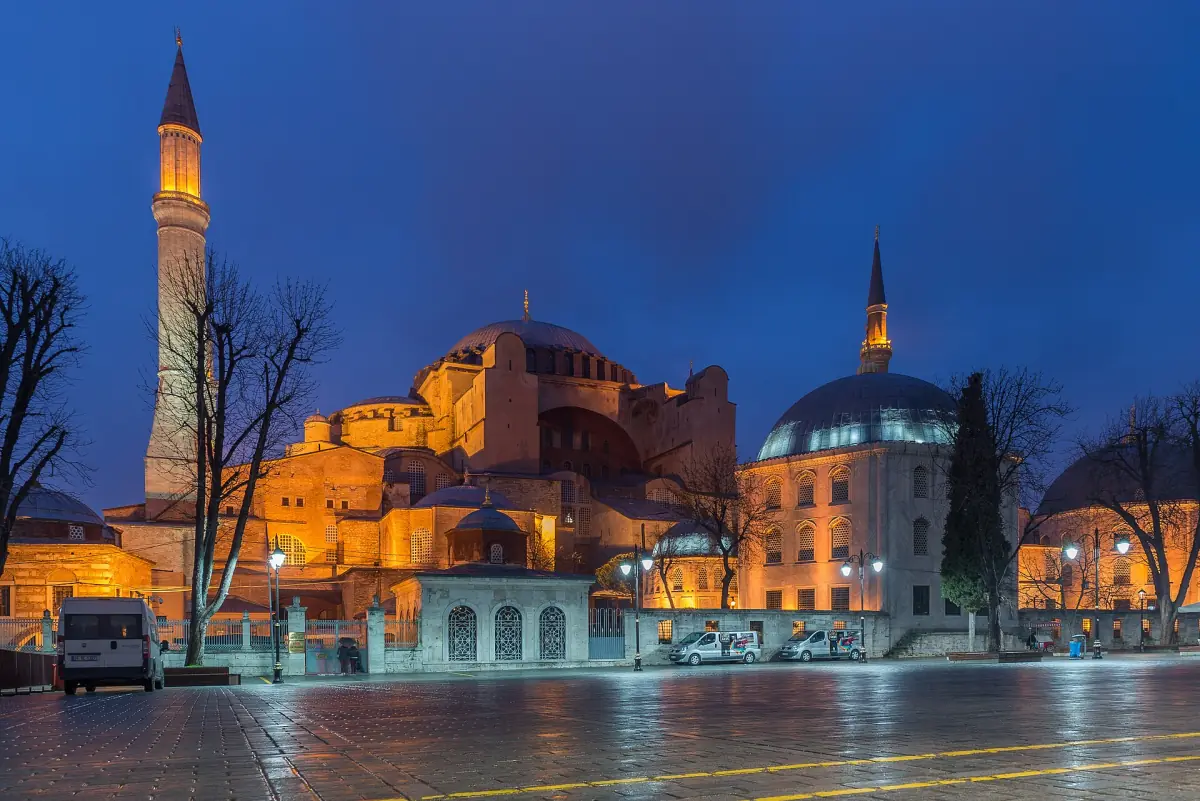
Hagia Sophia has been used as a mosque again since July 2020. The Presidency of Religious Affairs (Diyanet) administers it, and the first Friday prayer took place on 24 July 2020. Worshippers and visitors use the building in different ways, and the two do not follow the same rules.
Since 15 January 2024, foreign tourists follow a separate visitor route that includes the upper gallery. It has its own ticket. The prayer areas stay in use for worship. This page explains how the two fit together. The details on prices, hours and clothing are on the pages for tickets, opening hours and the dress code.
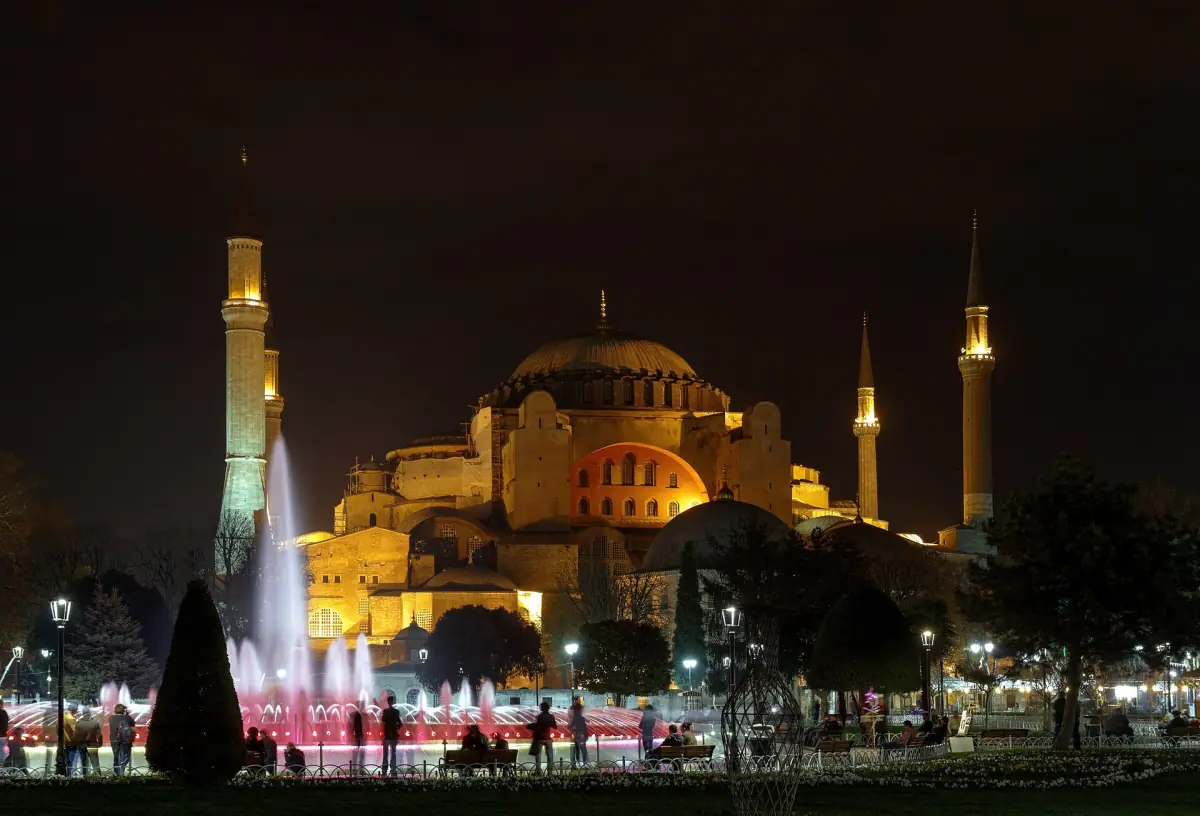
Worship and sightseeing side by side
A short overview of who uses which part.
| Topic | Worshippers | Visitors |
|---|---|---|
| Area | The prayer areas | Separate visitor route with the upper gallery |
| Entry | Free access for Turkish citizens to pray | Ticket, €25, children under 8 free |
| Timing | Around the daily prayers | Daily opening hours with a break on Fridays |
| Clothing | Modest dress, head covering for women | The same rules apply |
| Photos | Do not photograph people praying | Do not photograph people praying |
The free prayer access for Turkish citizens was announced together with the visitor route in 2023. A tourist ticket does not give you access to the prayer areas. Check on site which parts are open to you.
Hagia Sophia visits and guided tours
Guided visits and tickets for Hagia Sophia and the Sultanahmet area, with live prices and availability.
Prayer times, Fridays and Ramadan
What changes through the day, the week and the year.
Daily prayer times
The five daily prayers are Fajr, Dhuhr, Asr, Maghrib and Isha. The Diyanet publishes the times for Istanbul for every day and month, and they shift with the date. Do not rely on a single time from a guidebook.
Prayer times are not closing times
A prayer time does not automatically close the visitor route. Do not assume the gallery shuts at every call to prayer, and do not assume it stays open either. Look at the current timetable on the day.
Opening hours →The Friday break
Friday midday prayer is the busiest time for worship. One operator lists a Friday break from 12:30 to 14:30. Another listing gives 12:00 to 14:00. Plan to arrive before 12:00 or after 14:30.
Ramadan
Check the Diyanet prayer times for the days of your visit. For the visitor area, check the current timetable before you go. Ramadan and the Eid holiday after it are different periods and can have different rules.
If you want to pray
Turkish citizens have free access to the building for prayer. Muslim visitors from abroad who want to pray are pointed to the main entrance on the square, before the prayer times. That is not a way to skip the visitor route, and entry for each person depends on the check on site.
Arrive well before the prayer starts. Follow the staff and the signs.
Behaviour in the building
- Cover your shoulders and knees. Women cover their hair.
- Take off your shoes in the carpeted prayer areas.
- Keep your voice low and do not photograph people who are praying.
- Fold strollers and carry them in the visitor area.
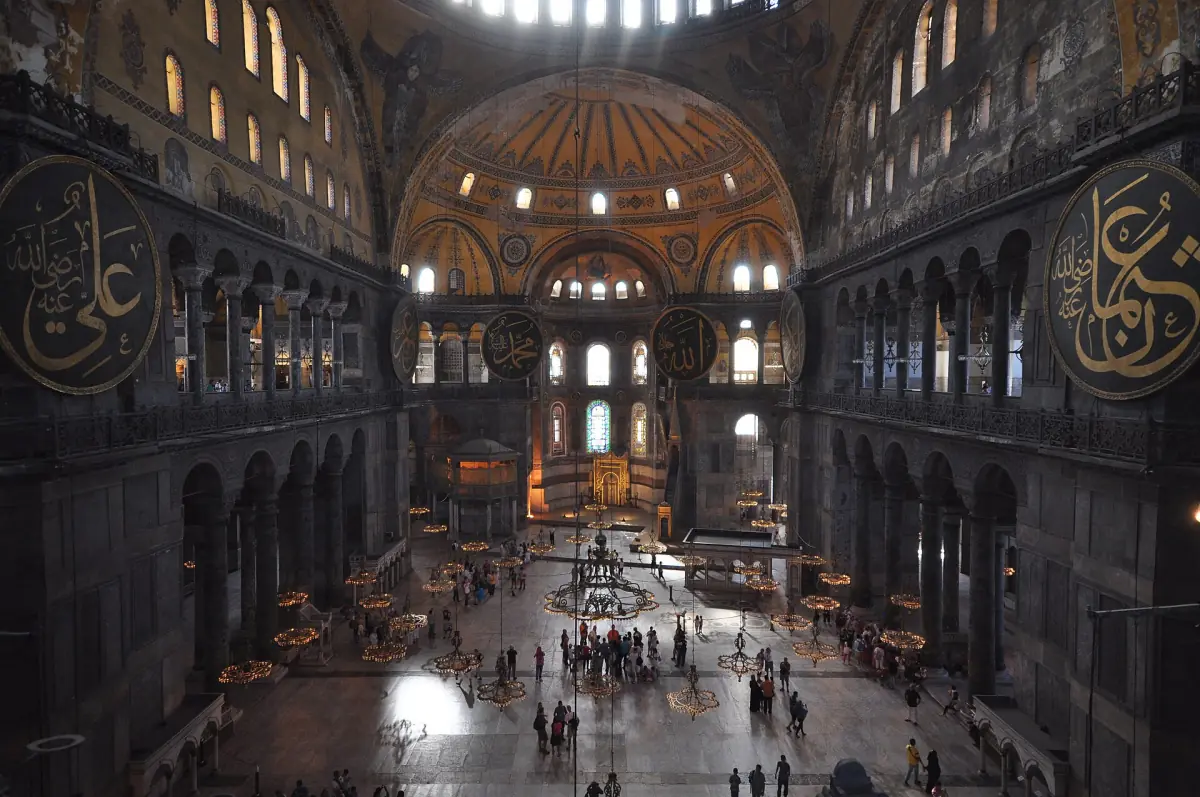
What you can see today
Restoration work affects some views.
Dome work
Reports from September 2026 describe a protective structure and a steel platform at the eastern half-dome, with conservation of mosaics, paintwork and marble. Do not expect a free view of the dome or the prayer hall.
Inside Hagia Sophia →A building of many layers
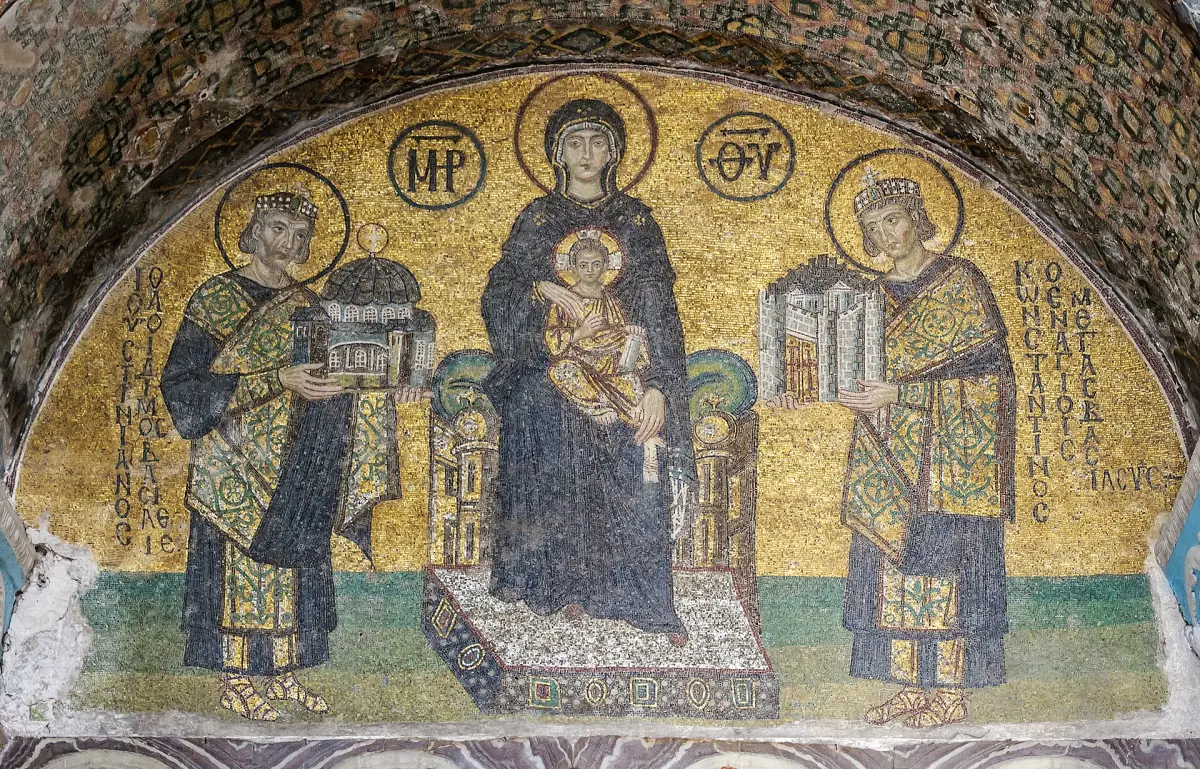
The marble cladding, the figural mosaics in the gallery and narthex, and Ottoman additions such as the mihrab and minbar belong to different periods. All of them are part of the building today.
History of Hagia Sophia →Temporary entrance
Because of the restoration, the visitor entrance and ticket desk are at a temporary location opposite the fountain of Ahmed III, on Bab-ı Hümayun Caddesi near the palace gate.
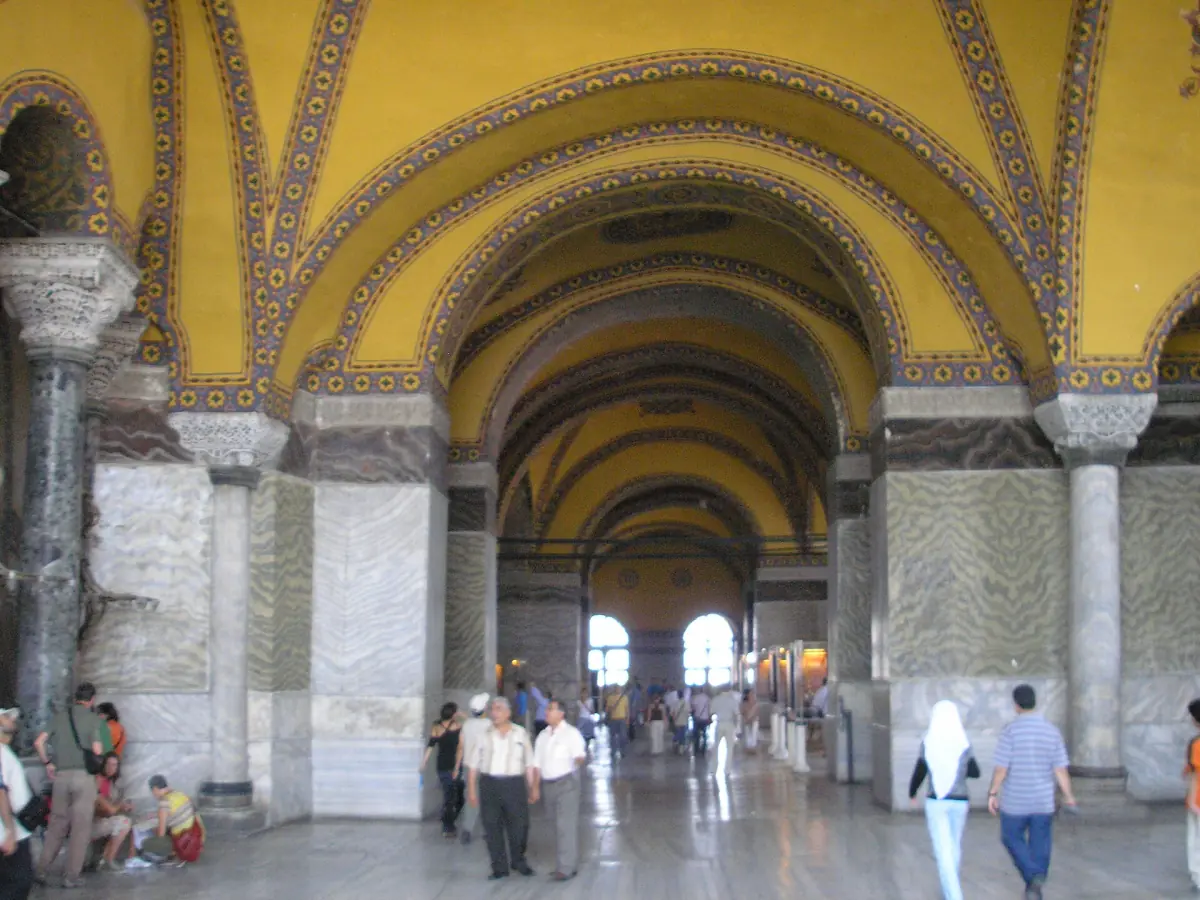
A checklist before you go
Five things that make the visit smoother.
Check the day
Look up the prayer times for your date and the current opening hours. Do not plan around Friday midday.
Opening hours →Dress for a place of worship
Shoulders and knees covered. Men wear long trousers. Women wear long trousers, a skirt or a dress, and cover their hair. Sleeveless or see-through clothes do not work.
Dress code →Plan the shoes
Shoes come off in the carpeted prayer areas. Wear shoes that are easy to take off and put on.
Know your ticket
The visitor area has its own €25 ticket for 2026, and children under 8 enter free. Show ID for a child at the turnstile.
Tickets →Keep expectations open
Restoration work can limit views. Treat the visit as a look at a working mosque and a historic monument at the same time.
Hagia Sophia as a mosque: frequently asked questions
Is Hagia Sophia a mosque or a museum?
It has been a mosque since 2020. The museum phase ran from 1935 to 2020. Visitors from abroad follow a separate route with a ticket, and the building stays open for worship.
Can non-Muslims visit?
Yes. Visitors use the separate route with the upper gallery and buy a ticket. Dress modestly and follow the rules for behaviour.
Is entry free for worshippers?
Turkish citizens have free access to pray. Foreign Muslims who want to pray are pointed to the main entrance on the square before prayer times. A tourist ticket does not stand in for this.
Does the building close for prayers?
Prayer times are published daily and are not identical with the closing of the visitor route. Friday midday is the long break, listed as 12:30 to 14:30 by one operator and 12:00 to 14:00 in another listing.
What happens during Ramadan?
Use the Diyanet prayer times for your dates and check the current timetable before you go.
Can I take photos?
Do not photograph people who are praying. For everything else, follow the signs and the staff.