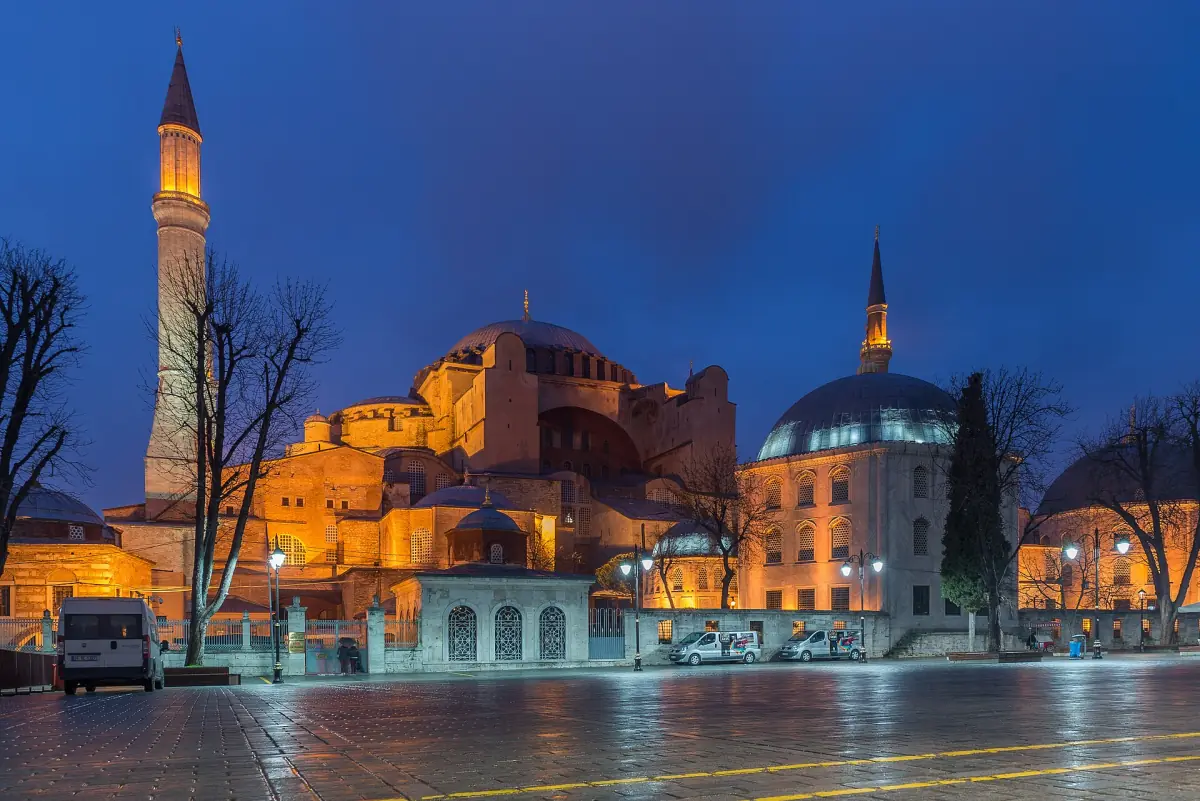
The Hagia Sophia in one paragraph
The name Hagia Sophia means Holy Wisdom. It does not refer to a saint called Sophia. Churches stood on this site in 360 and 415, and the present building, begun in 532 and consecrated in 537, is the third great church here. It served as a church, became a mosque after the conquest of Constantinople in 1453, worked as a museum from 1935 and has been a mosque again since 2020.
The Hagia Sophia is part of the Historic Areas of Istanbul, which were inscribed as a UNESCO World Heritage Site in 1985. The listing covers several areas of the old city and not this building alone. This guide is independent and describes the history in neutral terms.
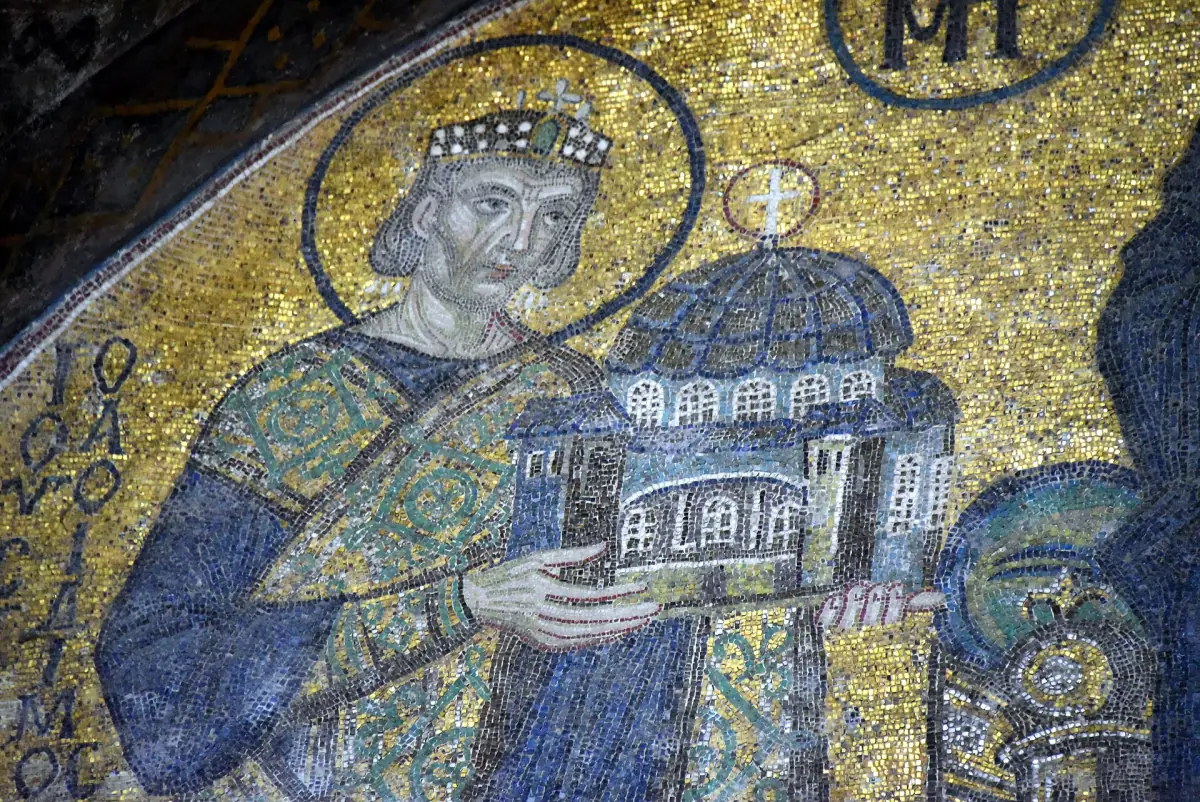
Timeline
The main dates, in order.
| Date | Event |
|---|---|
| 360 | First church on the site |
| 415 | Second church on the site |
| 532–537 | Justinian's building, the third great church, begun in 532 and consecrated in 537 |
| 558 | Part of the dome collapses after earthquake damage; rebuilt, reopened in 562 |
| 1204–1261 | Crusader and Latin rule interrupts Byzantine use |
| 1453 | Conversion to a mosque after the conquest of Constantinople under Mehmed II |
| 1934–1935 | Decision to use the building as a museum in 1934; museum operation from 1935 |
| July 2020 | Legal and administrative change; the museum phase ends |
| 24 July 2020 | First Friday prayer |
Tours that cover the history
Guided walks and tickets for the Hagia Sophia and the old city, with live prices and availability. Check what each offer includes before you book.
The phases of the building
Each period left marks you can still see.
Church, from 537
Justinian ordered the present building. Construction took from 532 to 537, and the architects were Isidore of Miletus and Anthemius of Tralles. After the dome collapsed in 558, it was rebuilt and the church reopened in 562.
The architecture →The interruption of 1204 to 1261
Do not describe the Byzantine years as one unbroken stretch. The Crusade and the Latin rule from 1204 to 1261 interrupted the Byzantine use of the church. The Deësis mosaic in the gallery is usually dated to about 1261.
Mosque, from 1453
After the conquest of Constantinople in 1453, Mehmed II converted the church into a mosque. Fittings such as the mihrab and minbar come from this period, and Sinan carried out strengthening work.
Museum, 1935 to 2020
The decision to use the building as a museum came in 1934, and the museum phase began in 1935. It ended in 2020. The 19th-century restoration by the Fossati brothers falls in the Ottoman years before this phase.
The separate museum nearby →Mosque again, from 2020
A presidential decision in July 2020 transferred the administration to the Presidency of Religious Affairs (Diyanet) and ordered opening for worship. The first Friday prayer followed on 24 July 2020. These are two separate events.
Visiting the mosque →What you can still see of each period
The building holds layers from every phase.
| Period | What remains |
|---|---|
| Justinian's church | The main building, marble cladding, the plan of the dome and half-domes |
| Byzantine decoration | Figural mosaics in the galleries and the narthex, from the 11th to the 13th century |
| Ottoman additions | Mihrab and minbar, and strengthening works |
| Today | A mosque with a separate visitor route; restoration of the dome continues |
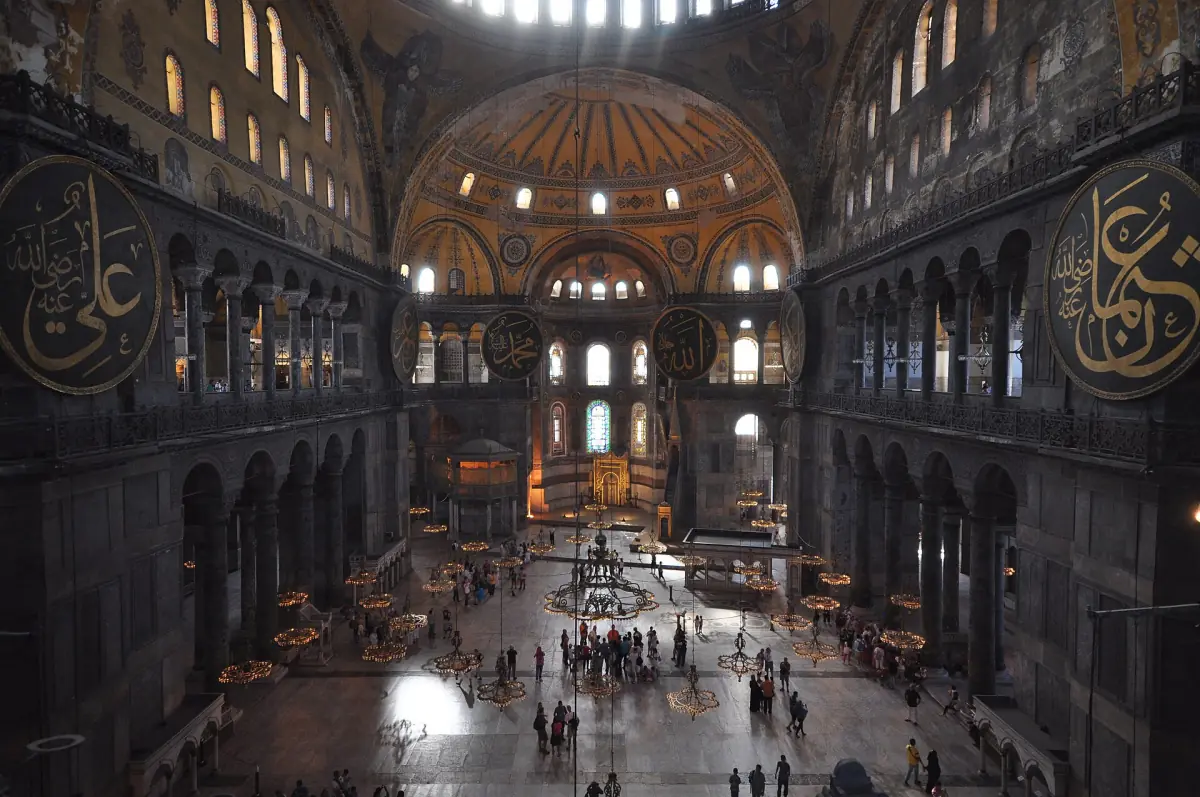
Two simple claims are wrong: that all the mosaics were destroyed, and that the building has stood unchanged since 537. What the visitor route shows is a building that was changed many times.
On the inside page you find where the surviving mosaics are and how restoration affects the view.
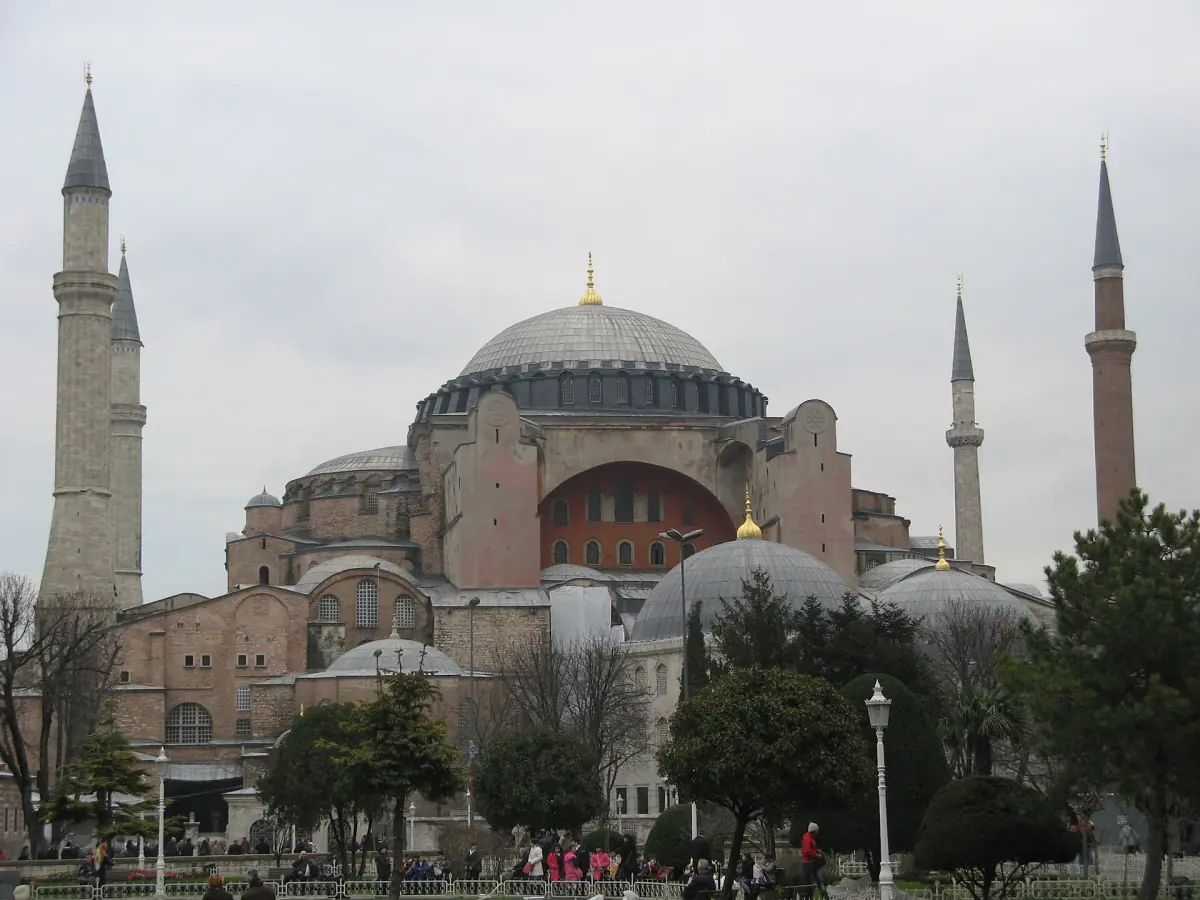
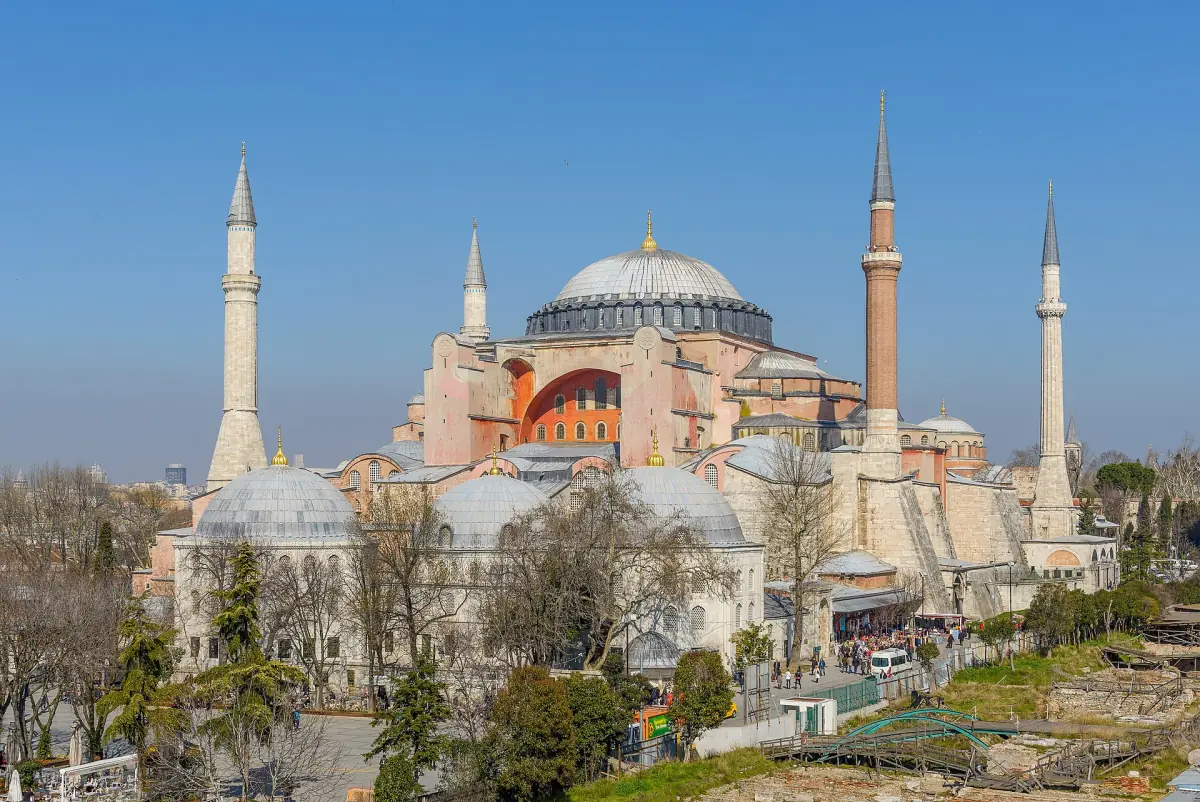
Hagia Sophia history: frequently asked questions
When was the Hagia Sophia built?
The present building was begun in 532 and consecrated in 537 under the emperor Justinian. It is the third great church on the site, after churches of 360 and 415.
What does Hagia Sophia mean?
Holy Wisdom. The name does not refer to a person called Saint Sophia.
When did it become a mosque?
After the conquest of Constantinople in 1453 by Mehmed II.
When was it a museum?
The decision came in 1934, museum operation began in 1935 and the museum phase ended in 2020.
When did it become a mosque again?
The legal and administrative change took place in July 2020, and the first Friday prayer was held on 24 July 2020.
Was it in continuous Byzantine use before 1453?
No. The Crusade and the Latin rule from 1204 to 1261 interrupted the Byzantine use of the church.